sales@lokvalve.com

What are the main classifications of butterfly valves with a brief introduction
 secureluokai
 November 17, 2026
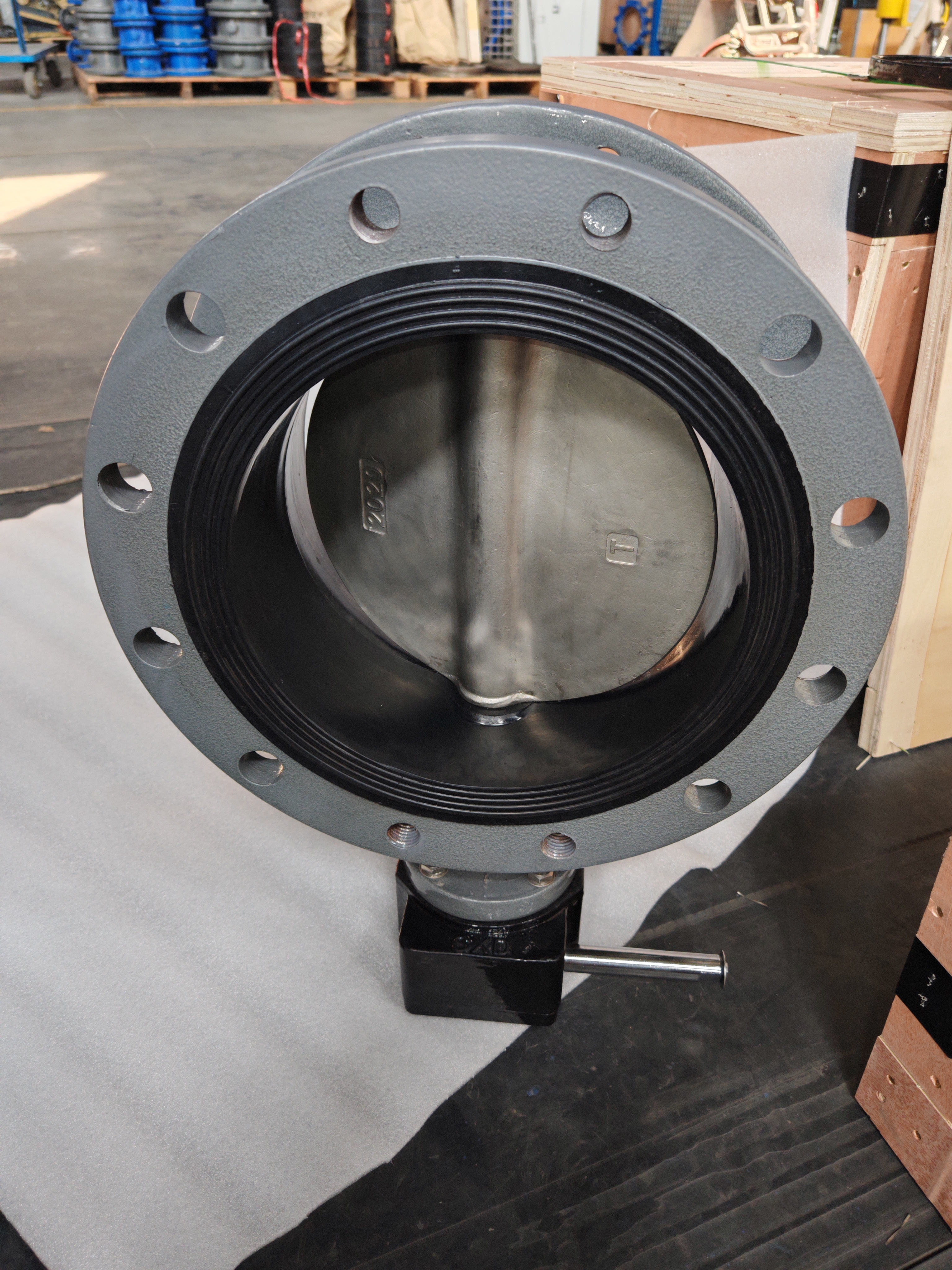
Butterfly valves are quarter-turn valves used to start, stop, or regulate fluid flow in pipelines. Their main component is a circular disc mounted on a shaft inside the valve body. Turning the shaft rotates the disc from a closed position, where it blocks the passage, toward an open position, where it allows fluid to pass around it. Because butterfly valves are compact, relatively lightweight, and often economical in larger pipe sizes, they are widely used in water treatment, HVAC, industrial processing, power generation, and other applications. However, not all butterfly valves have the same construction or operating capabilities. They can be classified by disc and shaft geometry, sealing material, connection style, and actuation method. These classifications overlap: a single valve may have a double-offset design, a soft seat, a wafer body, and an electric actuator. Understanding these categories helps buyers compare products and select a valve suited to the fluid, temperature, pressure, and operating conditions.
By disc and shaft geometry, butterfly valves are commonly classified as concentric, double-offset, or triple-offset designs. In a concentric butterfly valve, the shaft passes through the center of the disc and the centerline of the valve bore. This design typically uses a resilient seat that deforms slightly to create a seal, making it a common choice for water distribution, HVAC systems, and other services within the seat material’s limits. Single-offset designs also exist, although they are less commonly specified than the other three categories. Double-offset butterfly valves move the shaft away from both the sealing plane and the bore centerline. This arrangement helps the disc disengage from the seat quickly during opening, reducing rubbing and wear. Often described as high-performance butterfly valves, they can serve more demanding applications, depending on their construction and ratings. Triple-offset butterfly valves add a third geometric offset in the sealing surface, usually involving an angled conical sealing arrangement. This minimizes rubbing during travel and enables torque-seated closure, commonly with metallic sealing components. Such valves are often selected for high-temperature or demanding isolation duties, but their suitability must still be checked against the manufacturer’s specifications.
By sealing material, butterfly valves can be broadly divided into soft-seated and metal-seated types. Soft-seated valves use materials such as EPDM, NBR, or PTFE-based components to achieve tight shutoff. EPDM is widely used for water and many compatible services, but it is generally unsuitable for petroleum oils. NBR offers better resistance to many oils, although its compatibility varies with the specific fluid and operating temperature. PTFE provides broad chemical resistance, but its practical operating limits depend on the complete seat design and supporting materials. Soft seats can provide excellent leakage performance, but excessive heat, abrasive particles, or chemical attack may shorten their service life. Metal-seated butterfly valves use metallic sealing surfaces and are often considered where elevated temperatures or difficult process conditions make soft seats unsuitable. Their leakage performance depends on the design and specified test standard; metal seating does not automatically guarantee zero leakage. Likewise, a metal-seated valve is not necessarily fire-safe unless its design has been tested and qualified to an appropriate standard.
By pipeline connection, the most familiar butterfly valve types are wafer, lug, and double-flanged valves. A wafer butterfly valve fits between two pipe flanges and is typically secured by bolts or studs spanning the flange assembly. Its compact body helps reduce weight and installation cost. However, a standard wafer valve should not be assumed suitable for service with the downstream pipe removed. A lug butterfly valve has threaded or otherwise configured lugs around the body, allowing attachment to the adjacent flanges. Some lug designs permit removal of piping on one side while retaining the valve, but this capability and any reduced pressure rating must be confirmed by the manufacturer. Double-flanged butterfly valves have integral flanges on both sides of the body and are bolted to matching pipeline flanges. They are frequently used in larger pipelines and installations requiring a robust connection. Butt-weld butterfly valves are also available for certain specialized services, providing a permanent welded connection. For every style, flange dimensions, pressure class, gasket requirements, and disc clearance must match the piping arrangement.
By actuation method, butterfly valves are classified as manual, pneumatic, electric, or hydraulic. Manual valves commonly use a lever for smaller sizes and lower torque requirements, while gear operators make larger valves easier to operate. Pneumatic actuators use compressed air and can provide rapid operation; spring-return versions can move the valve to a specified position if the air supply fails. Electric actuators are useful for remote operation and automated systems, with some models supporting modulating control. Hydraulic actuators provide high torque for selected heavy-duty applications. Valves may also be grouped by body material, including ductile iron, carbon steel, stainless steel, and suitable plastics, or by intended duty, such as isolation or flow regulation. Selection should consider more than the category name: fluid compatibility, design pressure and temperature, required shutoff performance, cycling frequency, and actuator torque all matter. For throttling service, cavitation, noise, and control characteristics also require evaluation. Comparing these factors with verified product data is the most reliable way to choose an appropriate butterfly valve.
If you have any questions or inquiries, please feel free to contact us with sales@lokvalve.com or WhatsApp: +8618616568786