sales@lokvalve.com
A Brief Introduction to Flange Ball Valves
 secureluokai
 August 23, 2026
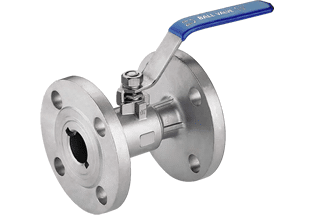
A flanged ball valve is a type of valve that uses a ball as the closure member to enable or shut‑off media flow by rotating the ball. It gets its name from the flanged connections at both ends. Compared with threaded‑end or welded‑end ball valves, flanged ball valves feature easy installation, firm connection, and convenient disassembly and maintenance. They are widely used in petroleum, chemical, natural gas, metallurgy, power generation, pharmaceutical, water supply‑drainage, HVAC and other industries. Normally applied to working conditions requiring rapid opening or closing of pipeline media, they play a vital role in industrial piping systems.
A flanged ball valve mainly consists of valve body, ball, valve stem, valve seat, sealing elements and actuator. A through‑hole is arranged in the middle of the ball. When the through‑hole aligns with the pipeline direction, the valve opens and media flows smoothly. Rotate the ball by 90 degrees, the through‑hole becomes perpendicular to the pipeline, the valve closes and cuts off media flow. In terms of structure, flanged ball valves fall into floating‑ball type and trunnion‑mounted ball type. By actuation mode, they can be manual, worm‑gear operated, pneumatic, electric and hydraulic. Varied structures and actuation modes match different pressure ratings, nominal sizes and automatic control requirements.
Flanged ball valves offer fast open‑close action, low flow resistance, reliable sealing performance and moderate operating torque. For full‑port ball valves, the bore of the ball is nearly equal to pipe inner diameter under open status, resulting in minor pressure loss. It also facilitates pipeline cleaning and on‑line inspection. Valve seats are commonly made of PTFE, reinforced PTFE or other temperature‑resistant and wear‑resistant materials. Metallic components can adopt carbon steel, stainless steel or alloy steel according to service media. It should be noted that standard ball valves are designed for shut‑off service rather than long‑term throttling. High‑velocity media may erode valve seats and shorten service life as well as impair sealing performance.
Flanged ball valve selection shall comprehensively consider media type, operating temperature, pressure class, nominal pipe size, flange standard and service environment. For corrosive media, priority shall be given to valve body and sealing material. For high‑temperature, high‑pressure or particle‑laden media, metal‑seated or special‑structure valves of suitable rating shall be adopted. During installation, verify flange standard and flow direction. Forced assembly is forbidden to prevent additional pipeline stress. In service, carry out regular inspection on valve stem, flange joints and sealing parts. Timely troubleshooting is required once leakage or abnormal operation occurs. Proper selection, standardized installation and reasonable maintenance can maximize valve performance and ensure long‑term stable operation of piping systems.
If you have any questions or inquiries, please feel free to contact us with sales@lokvalve.com or WhatsApp: +8618616568786